Product Description
Features:
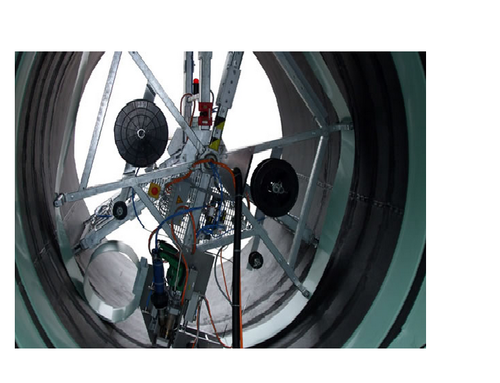
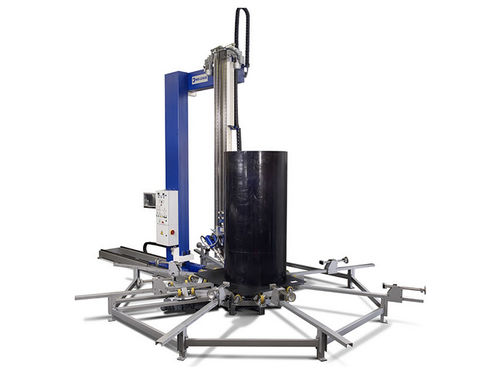
- Internal rotary welding system to weld joints in concrete pipe protectors or pipe liner segments
- Fully automated welding process
- A novelty when it comes to the quality and efficiency of welding
- Easy and comfortable operation
- The process forces are applied pneumatically
- The energy (electricity + compressed air) can either be supplied by trailing or pushing means
- The IWS is available for various pipe diameters and pipe diameter ranges
Range of Application:
Pipe line construction for waste and fresh water in inlined concrete design
| Technical Data |
IWS 25 |
IWS 30 |
| Inliner-tube diameter [mm] |
1,950 - 2,500 |
1,500 a 3,000 |
| Single process head Extruder equipment |
1x EXWELD beta2 SC |
| double process head Extruder equipment |
2x EXWELD sigma2 SC |
2x EXWELD sigma2 SC |
| Sheet Width [mm] |
approx. 200 |
approx. 200 |
| Sheet Thickness [mm] |
approx. 3 |
approx. 3 |
| Power Supply |
3x 230/400 V 3/N/PE, 50/60Hz |
3x 230/400 V 3/N/PE, 50/60Hz |
| Power consumption [kW] |
2.7 |
7.0 |
| Compressed Air Connection [bar] |
min. 8, max. 10 |
min. 8, max. 10 |
| Diameter of testing wire [mm] |
approx. 0.5 a 1.0 |
approx. 0.5 a 1.0 |
Precision and Efficiency in Plastic WeldingLeveraging induction heating technology, the IWS-2217 ensures rapid and uniform heat distribution for plastic welding. Its servo motor drive and automatic lubrication system enhance operation smoothness while maintaining accuracy up to 0.1 mm. The touch screen interface simplifies workflow management, making it suitable for high-volume production environments.
Reliability and SafetyCertified to CE and ISO 9001 standards, the IWS machine integrates advanced safety features, including an emergency stop, robust steel frame, and noise levels below 75 dB. Its comprehensive data logging supports production monitoring, while Ethernet and USB connectivity ensure seamless integration into existing networks.
FAQ's of IWS Machine:
Q: How does the IWS-2217 utilize induction heating for plastic welding?
A: The machine employs high-frequency induction to generate localized heat, allowing efficient melting and fusing of plastic materials such as PP, ABS, and PC. This method ensures consistent weld quality and reduces process cycle times.
Q: What types of plastics can be processed by this IWS machine?
A: The IWS-2217 is compatible with various thermoplastic materials, including polypropylene (PP), acrylonitrile butadiene styrene (ABS), and polycarbonate (PC), making it suitable for diverse manufacturing applications.
Q: When is maintenance required for the IWS-2217, and what does it involve?
A: This machine features low maintenance due to its automatic lubrication system and air-cooled design. Routine checks are recommended based on operating hours and production volume, typically involving inspection of tooling and system functions.
Q: Where can the IWS-2217 be installed, and what are its space requirements?
A: Designed for floor-mounted installation, the machine fits industrial environments and requires a space accommodating its dimensions (1400 x 600 x 1700 mm). Proper ambient conditions include a maximum humidity of 80% RH and an operating temperature range of 10C - 40C.
Q: What is the process for customizing tooling and jigs with this machine?
A: Customizable jigs and fixtures can be specified during installation or upgraded as needed, allowing adaptation for different part shapes and sizes. Service support is available for design and integration of custom tooling.
Q: How does the integrated data logging benefit production operations?
A: The integrated data logging system records essential production data such as cycle times, quantities, and machine status. This allows for performance analysis, traceability, and improved quality control during manufacturing.
Q: What are the main advantages of using the IWS-2217 for plastic welding applications?
A: Key benefits include precise, rapid welding cycles (40-60 seconds), robust construction, ease of use via touch screen controls, automatic operation, and compatibility with a variety of plastics. Additionally, its energy-efficient design and compliance with international safety standards ensure reliable, cost-effective production.










 Send Inquiry